Duel PvP poker strategy: Sit & Go tips, blinds and reading your opponent
Poker in the Duel PvP Arena is a Sit & Go: equal stacks, rising blinds and elimination. Here are practical principles for that format, how to spot patterns in the person across the table, and why none of it can promise you a win.
 By CASHFREE · Updated October 14, 2026 · 8 min read
The Sit & Go format on Duel
This guide builds on the rules in our Duel PvP poker rules, which come from the rules panel inside the poker lobby. The points that shape strategy:
- Elimination. Everyone starts with an equal stack of 100 big blinds. Run out of chips and you are out, with your finish place.
- Rising blinds and antes. Blinds climb on the schedule chosen in the lobby, and every dealt player posts a small ante each hand. The pressure to act only grows.
- Stacks carry between hands. You are not playing each hand on its own: you are managing a stack across the whole match.
- 1v1 or up to 9. Duel's Arena rules describe 1v1 matches, and the poker rules describe a table of 2 to 9 players.
That makes Arena poker a tournament game, not a cash game. The skill that matters is turning chips into a win, not chasing the best single hand.
Standard, Turbo or Hyper?
The lobby lets you pick how fast the blinds rise: Standard every 5 minutes, Turbo every 3, Hyper every 2, or a custom structure. This is the biggest lever you control.
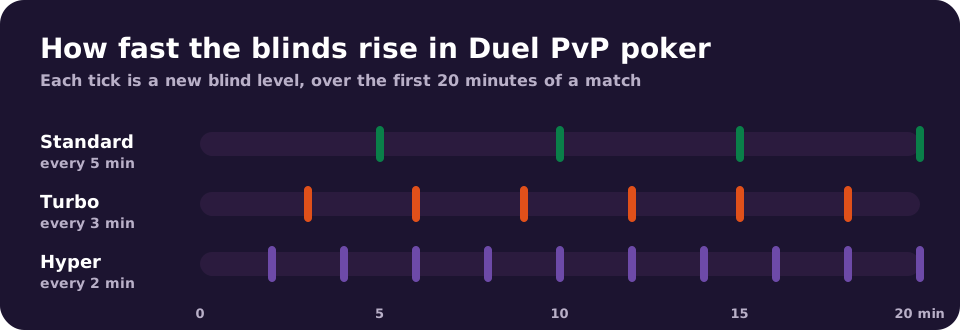
If you think you are the stronger player, choose Standard. If someone else creates the lobby, check the blinds setting before you accept: a speed you did not choose may suit them better than you.
Play by stack size
Count your stack in big blinds, not in dollars. When the blinds rise, your stack shrinks relative to them even if your chips do not change. These are rules of thumb, not solved charts:
Antes make every pot bigger, which rewards the player who takes more of them. Stealing blinds and antes is a real source of chips in a Sit & Go.
Heads-up play: button and big blind
Most Arena matches are 1v1, and heads-up poker works differently from a full table. In Duel's rules, heads-up, the button posts the small blind and acts first before the flop.
- On the button: you act first before the flop and last after it, which is a strong position. Raise a large share of your hands instead of folding or limping, and keep up the pressure.
- In the big blind: you have already paid part of the price, so defend widely against small raises, and re-raise some hands for value and as bluffs. Folding too often just hands over the blinds and antes.
- After the flop: you often have only one pair or nothing, so what matters is how your opponent reacts to bets. Bet when you have a plan, not out of habit.
- Chip value is simple. In winner-take-all play, a chip is worth the same whichever player holds it, so you can decide on the odds alone.
Payouts and the bubble
Duel's published payouts depend on how many players started:
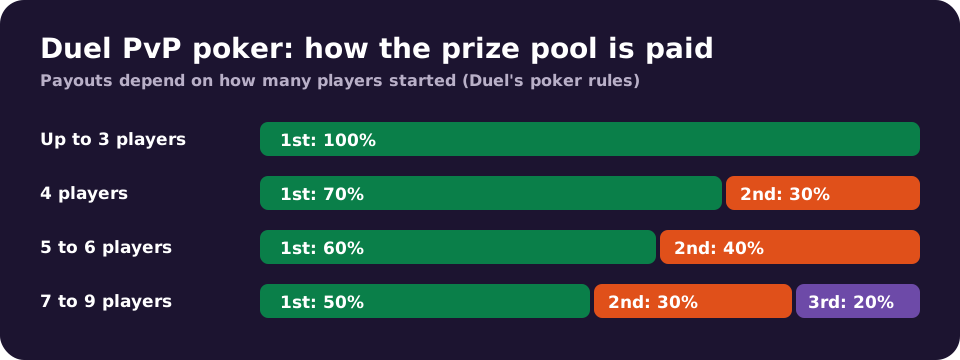
With up to 3 players the maths is the simple one above. With 4 or more, the bubble matters: finishing just outside the money earns nothing. That changes close decisions near the end: a marginal all-in that is fine heads-up can be a mistake when it would knock you out one place short of a payout. Poker players call this ICM, short for independent chip model: a chip you win is worth less than a chip you lose once the prizes are fixed.
Reading your opponent
This is where PvP differs from the house games: the other side is a person with habits, and habits leave patterns. You can only see what the table shows you, but over a match you can build a picture. Here are patterns that are worth watching, and what they often mean:
Duel's rules let the winner and the last player to fold reveal their hole cards, and hands are shown at showdown as in any poker game. Those hands are your best evidence, because they show what the opponent actually did with what they held.
- Small samples mislead. Two or three hands prove nothing. Update your picture as you see more, and stay ready to be wrong.
- They are reading you too. If your pattern is predictable, change it from time to time.
- Think in ranges. Ask “what hands would they play this way?” rather than “do they have it?”.
The clock and your connection
- Use the time bank on purpose. Every decision is on a clock. Run it out and your 30-second time bank, one for the whole match, starts draining. With it empty you check when you can and fold otherwise.
- Stay connected. A disconnected player is folded and blinded down until they return or bust. Use a stable connection before you stake money.
Fair play
Do not use a solver, a bot or any real-time assistant while you play, and do not collude with other players. This is widely treated as cheating at poker and can get an account closed; check Duel's terms for the exact rules. Studying solvers away from the table is a different matter and is how many players improve.
Common mistakes
- Choosing Hyper blinds against a better player.
- Counting chips in dollars instead of big blinds.
- Waiting for a premium hand while the ante and blinds eat your stack.
- Calling a short-stack shove out of curiosity.
- Ignoring the bubble in 4-plus player matches.
- Running out the clock and losing your time bank.
- Playing bigger stakes than you can afford after a loss.
Duel Arena poker FAQ
Is Duel Arena poker skill or luck?
Both. The cards are random, but decisions about when to bet, fold or go all-in are skill, and they decide who wins over many hands. In one short Sit & Go the cards can still beat the better player, so no strategy guarantees a win.
What is the best strategy for Duel Arena poker?
Play position-aware, aggressive poker early when stacks are deep, keep track of your stack in big blinds, switch to raise-or-shove poker when you drop below about 15 big blinds, and adjust to the patterns you see in your opponent. Pick Standard blinds if you want skill to matter more than luck.
Which blinds speed should I choose: Standard, Turbo or Hyper?
Standard raises the blinds every 5 minutes, Turbo every 3 and Hyper every 2. Faster levels shrink everyone's stack in big blinds sooner, so more hands end in all-ins and luck matters more. Standard gives the best player the most room to outplay an opponent.
How do I read an opponent in 1v1 poker?
Watch how often they raise, how often they fold to a re-raise, whether they call down to the river, how their bet sizes change with the strength of their hand, and any cards they reveal after a fold. Small samples mislead, so treat early reads as guesses and update them.
Can I use a poker solver or a bot in the Arena?
Do not. Real-time assistance from solvers or bots, and collusion between players, is widely treated as cheating and can get an account closed. Study solvers away from the table, and check Duel's terms for its exact rules.
Is there a guaranteed way to win at Duel Arena poker?
No. A strategy can improve your odds against weaker players, but it cannot guarantee a win, and a better player can lose any single match. Only stake money you can afford to lose.
We only write what we can check on the casino's own pages. The strategy here is general poker principles applied to the rules Duel shows, not a record of results. Spotted something that changed? Tell us on @Cashfreecodes.
Get 50% up to 80% rakeback on Duel
Other Duel codes stop at 50%. Enter Duel2027 when you create your account.